
No staining, no splinters
Composite Deck Building in Elgin, IL
Capped composite boards over a properly framed and flashed structure, so the deck surface and what holds it up both last.
- Free on-site estimates
- Written, itemized quotes before work starts
- Permit drawings and inspections handled for you
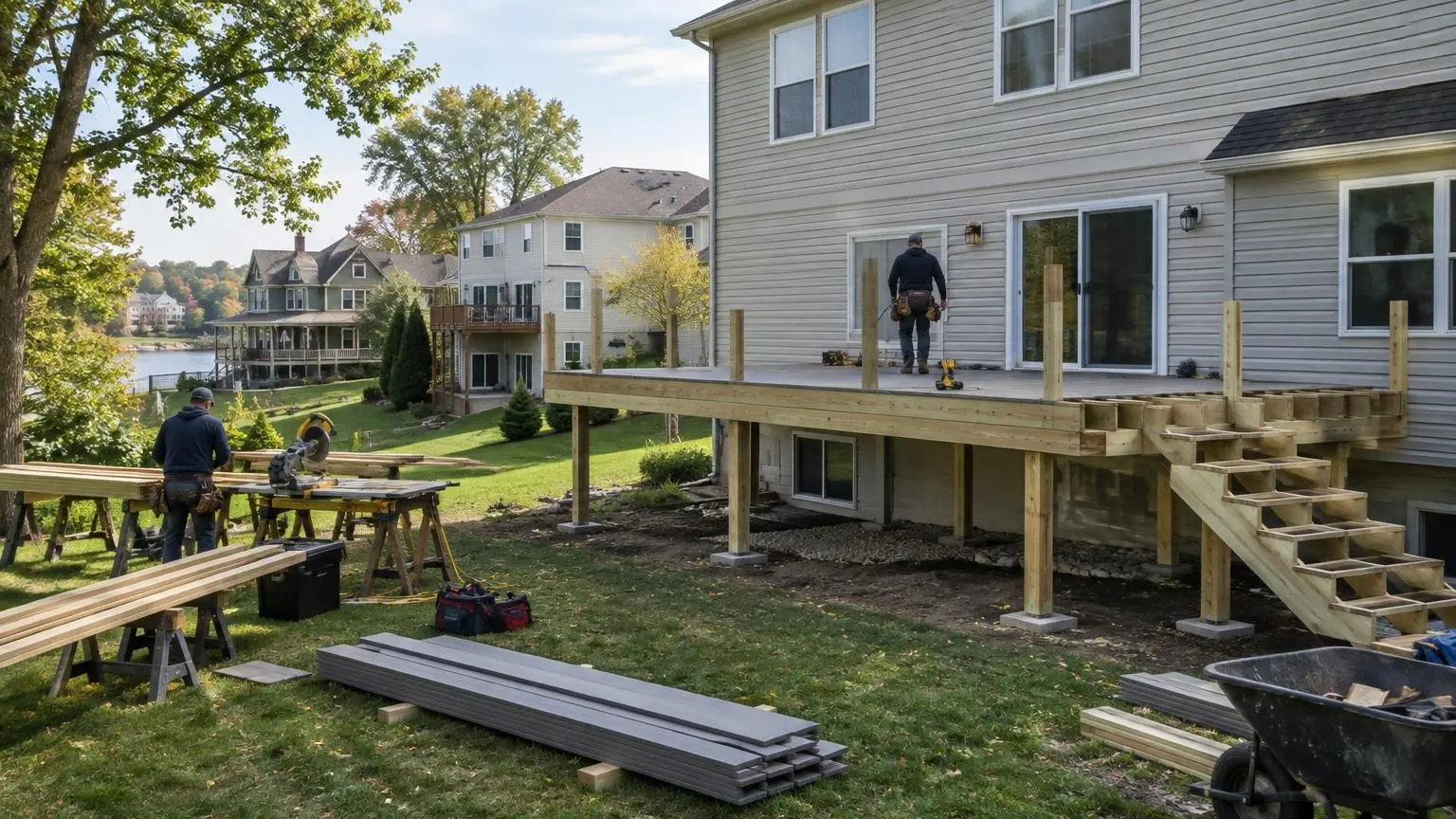
A Low-Maintenance Deck, Built on a Solid Frame
Composite deck building is the choice for Elgin homeowners who would rather spend summer weekends on the deck than refinishing it. Composite boards are made from wood fiber and plastic, usually with a hard polymer cap on the outside, and they do not need sanding, staining or sealing. They also do not rot or splinter the way wood can after years of humid summers and snow sitting on the surface. What they do need is a frame underneath that is built just as carefully as for any other deck, because the boards are only as good as what holds them up.
Capped composite, uncapped and PVC
Not every composite board is the same. Capped composite has a protective shell that resists staining and fading; Forbes Home puts capped composite at about $30 to $60 per square foot and uncapped boards at about $20 to $40. PVC boards contain no wood fiber at all, are lighter and resist moisture best, and run about $40 to $70 per square foot by the same guide. At the estimate we bring samples so you can see the colors and grain patterns in your own light, next to your siding.
The frame still matters
The structure under a composite deck is usually pressure-treated lumber, and in a Chicago-area climate it takes a beating. We set footings below the frost depth your permit requires, which is generally 42 inches around here, so the frame does not heave in January. The ledger is bolted to the house and flashed so water does not get into the rim joist, and we use joist tape on the tops of joists and beams to slow the moisture that sits under the boards. Composite boards also have span limits that are often tighter than wood, especially on diagonal layouts, so joists are spaced to the manufacturer's installation guide.
Heat, snow and expansion
Composite expands and contracts more with temperature than wood does. Board ends need the right gaps, and installers have to account for the temperature on the day the boards go down; a deck installed in a hot July afternoon behaves differently in a February cold snap. Darker colors also get hotter in full sun. For snow, most composite manufacturers allow a plastic shovel used along the boards, and calcium chloride ice melt is generally preferred over rock salt; check the care guide for your brand.
Warranties, explained
Major composite brands carry long limited residential warranties on the boards themselves. Trex, for example, lists limited residential warranties of 25 to 50 years for its decking and railing, depending on the line. Those warranties come from the manufacturer, cover the material, and usually depend on installation that follows the brand's instructions, which is one reason we follow the installation guide to the letter. They do not cover the wood framing underneath.
Hidden fasteners and finishing details
Most capped boards can be installed with hidden clips that hold the boards from the side, leaving a clean surface with no screw heads. Picture-frame borders, matching fascia boards to cover the rim joists, and solid or slotted stair treads finish the look. We go over these options with you and price each one so the quote shows what each detail costs.
Is composite right for your yard?
Composite makes the most sense if you plan to stay in the house for years, want a deck that looks the same in ten summers as it does at install, and do not want to restain. If budget is the priority, a pressure-treated deck costs less up front. We price both side by side so you can decide.
What This Covers
A composite deck build covers the structure, the surface and the finishing trim.
Capped composite decking
Wood-plastic boards with a protective polymer cap, in a range of colors and grain patterns.
PVC decking
All-polymer boards for the best moisture resistance, often used on low decks near the ground.
Hidden fastener systems
Side clips that hold boards without visible screws on the walking surface.
Fascia and borders
Matching fascia over the rim joists and picture-frame borders around the edge.
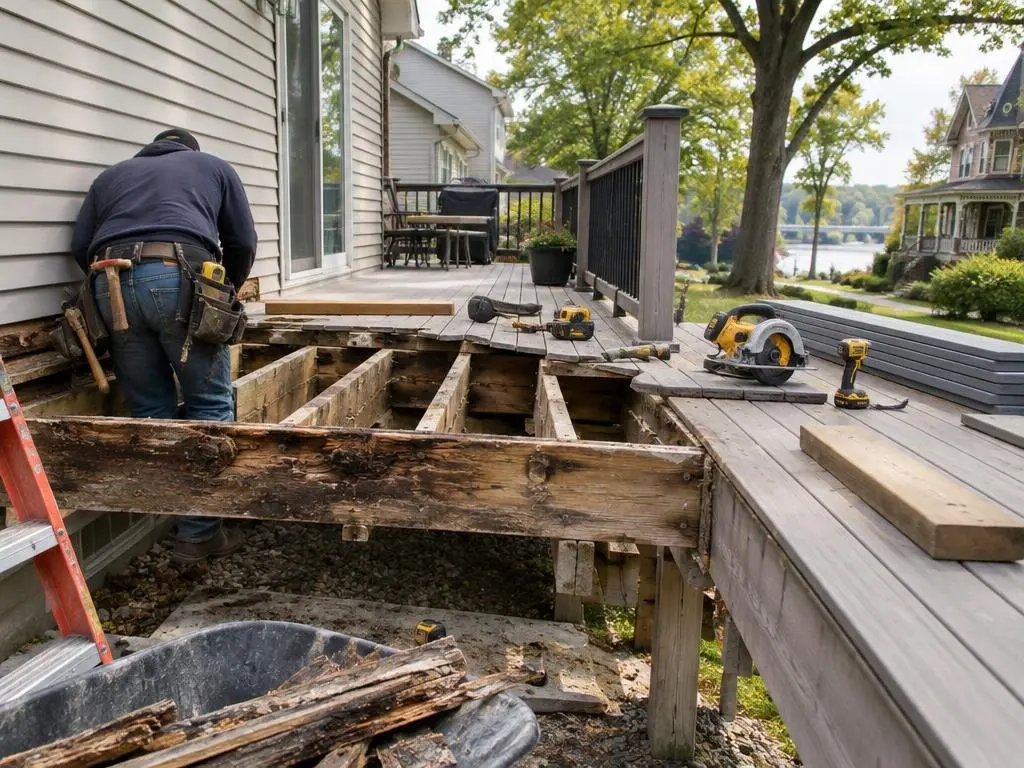
Typical Composite Deck Costs
| Item | Published range |
|---|---|
| Composite deck, installed (Angi) | $25 to $54 per sq ft |
| Composite deck, installed (Forbes Home) | $25 to $45 per sq ft |
| Composite boards, materials only | $12 to $22 per sq ft |
| 10x20 composite deck (200 sq ft) | $5,000 to $9,000 |
| 20x20 composite deck (400 sq ft) | $10,000 to $18,000 |
Published national ranges from Angi (2026) and Forbes Home. Prices in the Chicago area can differ from national averages, and height, railings, stairs and access change the total. Your written estimate is the price.
How It Works
1. Measure and choose
We measure the yard, check the house framing and bring board samples to compare.
2. Draw and permit
You get a drawing and itemized quote; we file the permit and any HOA paperwork.
3. Footings and frame
Footings go below frost depth and are inspected, then the frame is built and inspected.
4. Boards and trim
Decking, fascia, railings and stairs go on, followed by a final inspection and walk-through.
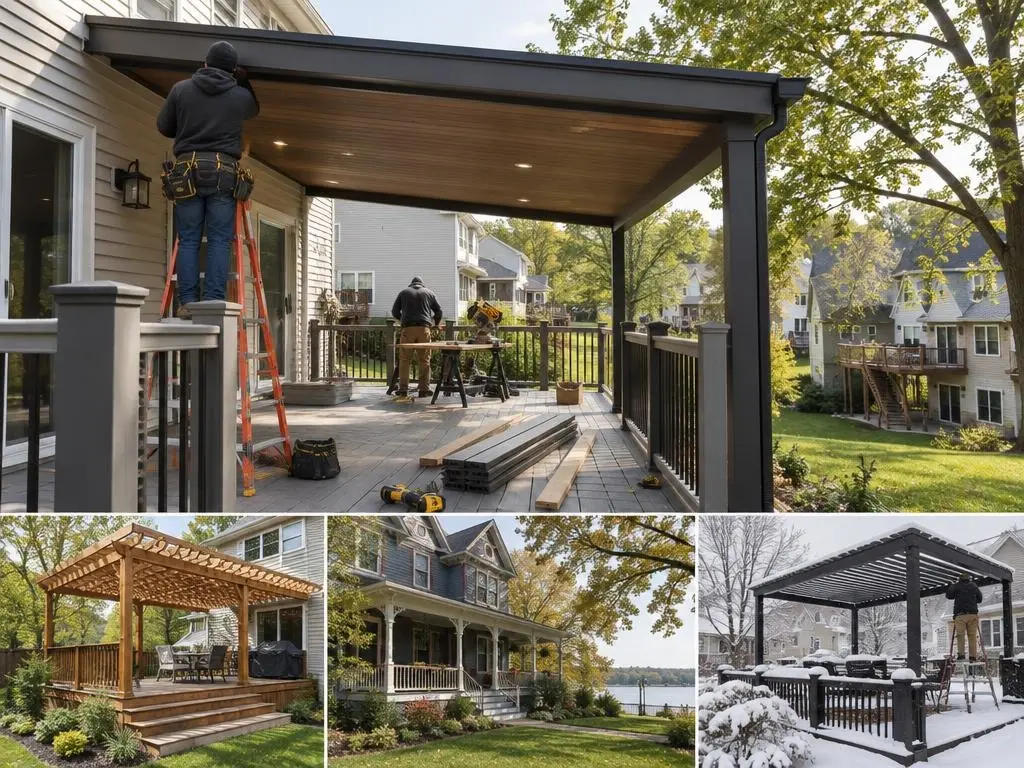
Composite Deck Building Questions
How much does a composite deck cost?
Angi's 2026 data puts installed composite at about $25 to $54 per square foot, and Forbes Home lists a 10x20 composite deck at roughly $5,000 to $9,000. Railings, stairs, height and board line move the price. We give you a written number after seeing the yard.
Does composite decking get hot in the sun?
It can, especially darker colors in full afternoon sun. Lighter colors and some newer board lines run cooler. If your deck faces south or west with no shade, we bring light and dark samples so you can feel the difference.
Can I shovel snow off a composite deck?
Most manufacturers allow a plastic shovel pushed along the length of the boards. Metal blades can scratch the cap. Many brands suggest calcium chloride ice melt rather than rock salt; check your brand's care guide.
Is the frame under a composite deck also composite?
Usually not. Most composite decks sit on pressure-treated wood framing, though steel framing is an option. That is why footings, ledger flashing and joist protection still matter.
How long does composite decking last?
The boards are designed to last decades, and major brands back them with long limited residential warranties; Trex, for example, lists 25 to 50 years. The life of the whole deck also depends on the framing and how well water is kept out of it.
Composite Deck Building Service Areas
- Deck Contractors in Elgin, IL
- Deck Contractors in South Elgin, IL
- Deck Contractors in Bartlett, IL
- Deck Contractors in Streamwood, IL
- Deck Contractors in Hoffman Estates, IL
- Deck Contractors in Carpentersville, IL
- Deck Contractors in Algonquin, IL
- Deck Contractors in Huntley, IL
- Deck Contractors in Gilberts, IL
- Deck Contractors in Hampshire, IL
- Deck Contractors in Pingree Grove, IL
- Deck Contractors in Sleepy Hollow, IL
- Deck Contractors in St. Charles, IL
- Deck Contractors in Geneva, IL
- Deck Contractors in Batavia, IL
- Deck Contractors in Wayne, IL
- Deck Contractors in West Dundee, IL
- Deck Contractors in East Dundee, IL
- Deck Contractors in Barrington, IL
- Deck Contractors in Schaumburg, IL
- Deck Contractors in Crystal Lake, IL
- Deck Contractors in Lake in the Hills, IL
- Deck Contractors in Elburn, IL
- Deck Contractors in Campton Hills, IL
Get a Composite Deck Building Estimate
Free estimates for composite decks in Elgin and the Fox Valley.